Numbers
The group’s size in relation to the rest of the population.

OSSERVATORIO NAZIONALE SULLE MINORANZE
ESTABLISHING THE AWARD
The legacy of law.
The dignity of every person.
Symbolic illustration · The trophy remains a surprise
01 / THE INSTITUTION
The Francesco Capotorti Award is established by the Osservatorio Nazionale sulle Minoranze (National Observatory on Minorities), its founder and promoter, which appoints an internal jury.
Who is the Award for? The Award recognises those working to protect the rights and promote the identities of national or ethnic, linguistic and religious minorities.
Naming the Award after Capotorti places the dignity of people belonging to minorities and the protective role of law at its heart. It connects the Italian legal tradition with the international dimension of human rights.
Discover the Observatory ↗02 / THE JURIST
Born in Naples on 9 February 1925, Francesco Capotorti was an Italian jurist and professor of international law. His academic career took him to the universities of Cagliari, Bari, Naples and Rome.
In 1976 he became a Judge at the Court of Justice of the European Communities. Later that year, he took office as Advocate General, serving until 1982. He died on 4 April 2002.
As Special Rapporteur of the UN Sub-Commission on Prevention of Discrimination and Protection of Minorities, he prepared the 1977 study on the rights of persons belonging to ethnic, religious and linguistic minorities.
Institutional biography · Court of Justice (Italian) ↗03 / THE LEGAL CONTRIBUTION
Capotorti’s 1977 proposal remains a fundamental reference in legal debate. It is not a universally agreed definition or, in itself, a binding one.
SUMMARY OF THE 1977 PROPOSAL · PARAGRAPH 568
A group smaller in number than the rest of a State’s population, occupying a non-dominant position, with distinctive ethnic, religious or linguistic characteristics and a bond of solidarity, even implicit, aimed at preserving its culture, traditions, religion or language.
The group’s size in relation to the rest of the population.
The group’s position within society.
Ethnic, religious or linguistic characteristics.
The wish to preserve a shared heritage.
The historical wording included citizenship of the State. This criterion has subsequently been debated: minority protection today should not be understood as generally restricted to citizens. This summary should be read in its historical context. Source: OHCHR, Minority Rights, pp. 2–5.
04 / THE UNITED NATIONS LEGACY
To give effect to Article 27 of the International Covenant on Civil and Political Rights, Capotorti proposes a declaration devoted to the rights of persons belonging to minorities.
The United Nations publishes the Study on the rights of persons belonging to ethnic, religious and linguistic minorities.
On 18 December, the General Assembly adopts resolution 47/135 following a collective negotiation process to which the study had contributed.
The Declaration protects the identity, culture, religion, language and participation of persons belonging to national or ethnic, religious and linguistic minorities. It is a declaratory instrument, not a treaty, providing guidance for the promotion of rights.
History of the Declaration · United Nations ↗05 / THE JURY
The internal jury, appointed by the Osservatorio Nazionale sulle Minoranze, brings together three paths of commitment to public life, culture and the protection of identities.
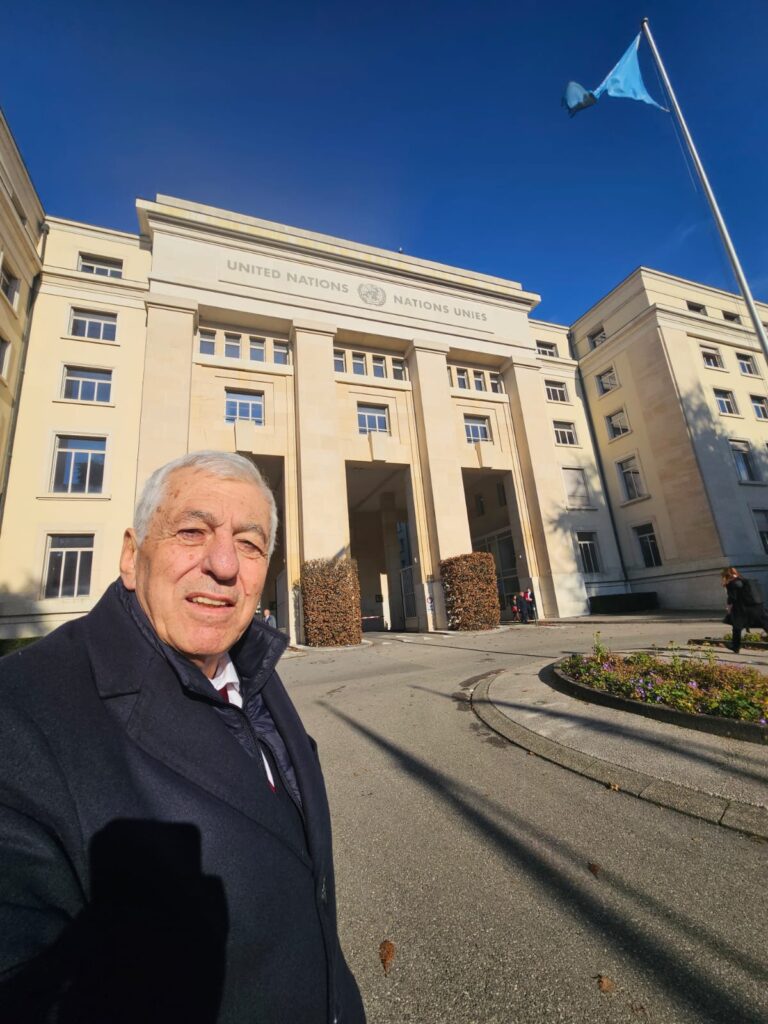
Commendatore · Professor · Lawyer
A jurist and former Mayor of Vigo di Fassa, he combines public service with cultural commitment.
He chaired the Magnifica Comunità di Fassa, in the heart of the Ladin Dolomites.
He conceived the Bell of Minorities, dedicated to peace and fraternity among peoples.
Within the Observatory’s network, he contributes to the promotion of Ladin people and language.
He brings experience of dialogue between territories, identities and rights to the jury.

Commendatore · Professor
Known as Alexian, he is a musician, composer, poet and scholar of Romani culture.
He holds two degrees from the University of Bologna, in Languages and Musicology.
He has taught Romani history, language and culture at several Italian universities.
An essayist and founder of Thèm Romanò, he promotes knowledge and challenges prejudice.
He brings the voice of Roma culture and a longstanding commitment against discrimination to the jury.

Commendatore · Dott.
A Political Science graduate of Sapienza University, he has extensive experience in public administration.
A former senior official at the Italian Presidency of the Council of Ministers, he coordinated services in regional affairs and local autonomy.
He is President of Fondazione Valori d’Italia, which promotes civic culture and social responsibility.
Within the Observatory, he advises on relations with the Presidency of the Council of Ministers.
He contributes institutional expertise and a commitment to dialogue between communities to the jury.
THE SYMBOL OF RECOGNITION
The trophy and its dedication remain a surprise.
The presentation image is symbolic and does not depict the final trophy.
DOCUMENTATION